April is national foot health awareness month and what better way to celebrate than getting that nagging foot problem checked out. Whether it's pain or an unsightly fungus, April is the perfect month to put your best foot forward. The weather is getting warmer and we're starting to break out our sandals. If you're feet are anything like mine, they're happy to finally get some fresh air after being cooped up all winter. Give us a call to schedule an appointment to get your feet ready for spring.
P.S. Don't forget about our nutrient-rich nail polish that's free of harsh chemicals. Over the last few months, many of you have asked about when we would be ordering more colors. They're finally in! You've got to stop in and check them out.
For more information visit our website http://www.roanokefoot.com/
Showing posts with label Roanoke. Show all posts
Showing posts with label Roanoke. Show all posts
Tuesday, April 26, 2011

Thursday, January 27, 2011
Roanoke Podiatrist Can Relieve Your Painful Ingrown Toenail
If your toenail is curved and growing into the skin; or if it is "digging in" at the borders of the nail, or it is causing pain, redness, warmth, and swelling in your toe you probably have an ingrown toenail.
As a Roanoke Virginia podiatrist, I want you to know that I see these every single day in my office and what most people tell me is that they’ve been suffering with them from for some time. They’ve tried to treat it themselves and usually, just made it a little worse. And I want you to know that I wish I could visit everyone who is suffering from this to tell them that they just don’t have to suffer. YOU don’t have to suffer. You don’t have to restrict your activities in any way because of this pain. I can’t visit you in your home but you can visit me in my office and we will solve this problem for you. Most people tell me, “Dr. Feeny, I wish I ‘d come in to see you a lot sooner because now I feel great!”
If you have an ingrown toenail, it's important to have a let us take a look at it. We can explain treatment options to ease your pain, but even more importantly, keep it from becoming infected. If an ingrown causes a break in the skin, it becomes easy for bacteria to enter the area and cause an infection. Look out for drainage and a foul odor - these can often be signs of infection. Even if there is no open wound, a curved nail may eventually progress to an infection, so pay close attention to your feet!
Dedicated to your healthy feet,
Dr. Jennifer Feeny
As a Roanoke Virginia podiatrist, I want you to know that I see these every single day in my office and what most people tell me is that they’ve been suffering with them from for some time. They’ve tried to treat it themselves and usually, just made it a little worse. And I want you to know that I wish I could visit everyone who is suffering from this to tell them that they just don’t have to suffer. YOU don’t have to suffer. You don’t have to restrict your activities in any way because of this pain. I can’t visit you in your home but you can visit me in my office and we will solve this problem for you. Most people tell me, “Dr. Feeny, I wish I ‘d come in to see you a lot sooner because now I feel great!”
If you have an ingrown toenail, it's important to have a let us take a look at it. We can explain treatment options to ease your pain, but even more importantly, keep it from becoming infected. If an ingrown causes a break in the skin, it becomes easy for bacteria to enter the area and cause an infection. Look out for drainage and a foul odor - these can often be signs of infection. Even if there is no open wound, a curved nail may eventually progress to an infection, so pay close attention to your feet!
Dedicated to your healthy feet,
Dr. Jennifer Feeny
Tuesday, December 28, 2010
Corns

For more information visit our website http://www.roanokefoot.com/
Corns are hyperkeratotic papules of the skin. They are also known as clavi. These lesions can be painful.
They develop due to excess pressure on the bony prominences of the feet and toes.
Factors that contribute to the formation of corns include:
Abnormal foot mechanics
Foot Deformities
High Activity Levels
Peripheral Neuropathy
Corns are often seen in:
Athletes
Elderly Patients
Diabetic Patients
Types of Corns:
Hard Corn (Helloma Durum)- Commonly found over the joints of toes.
Soft Corn (Helloma Molle)- Found in interdigital locations and has a macerated texture.
Periungual Corn- Found near the edge of a nail.
Presentation:
Corns present with a growth on the foot or toes. Pain is associated with walking or wearing shoes.
Direct pressure generally cause pain to the affected area.
After debridement a corn may have a central plug of skin.
Intrinsic causes:
Foot deformities such as a bunion or a hammertoe
Extrinsic causes:
Activity
Poor fitting shoe gear
Work Up:
X-rays of the feet while weight-bearing can help identifying bony prominences.
Pressure studies- Can help locate the exact location of pressure.
After trimming the lesion the examiner can attempt to determine if the lesion is a corn, callus, or wart.
Treatment:
Hard corns- Pare or debulk the lesion utilizing a small blade. Removal of the centralized plug.
This should be performed regularly in high risked patients such as diabetics.
Regular debridement might decrease the risk of ulceration.
Soft corns- Hygiene is important to decrease the chance of infection. The patient should wear a pair of properly fitting shoes.
The use of an antifungal or antibacterial powder may be helpful.
Toe spacers can also be beneficial.
Other treatment:
Keratolytics such as salicylic acid, urea cream, or lactic acid cream may be prescribed by your doctor.
Good fitting shoe that match the length and width of the patient's feet.
The use of a pumice stone for careful debridement.
The use of good foot hygiene.
The use of a silicone sleeve.
Orthotics
Surgical care:
If conservative treatment fails surgery may be indicated to remove bony prominences.
Tuesday, May 11, 2010
Shoes that are creating their own path in our world Part 1
Tom’s
Tom’s are extremely colorful with many different patterns, but this is just a bonus. The best thing about these shoes is that you get two for the price of one! Deals are great aren’t they!! What is even better about this deal is that one pair of shoes goes to you and one pair of shoes goes to a  child who doesn’t have any shoes to call their own. Tom’s was started in 2006 by Blake Mycoskie. His inspiration came from seeing children without shoes on his visit to Argentina. A little known fact is that many diseases can be picked up from the ground by being absorbed through the skin on the feet. Another concern is puncture wounds especially when medical treatment is not readily available. These things are not acceptable when there is something we can do about them. So, when Blake came back to the states he got very busy. During his first year in business he gave 10,000 shoes to children all around the world. Tom’s have become increasingly popular over the years. Their expansion has been exciting and inspiring. As of April 2010, Tom’s have given approximately 600,000 shoes to children all over the world! To check out Tom’s shoes online please visit www.toms.com.
Wednesday, March 31, 2010
Hammertoes

Digital contraction deformities include hammertoes, clawtoes, and mallet toes.
There are three main causes of digital contracture deformity:
Flexor Stabilization- occurs about >70%. The muscles in the back of the foot and leg fire earlier and longer to stabilize the hypermobile fore foot. This results in overpowering the little muscles in the foot causing the hammertoe. It is possible to see rotation of the 4th and 5th digits with this type of deformity.
Extensor Substitution – is associated with a high arch foot, foot drop, and a weakness of the muscles in the front of the leg.
Flexor Substitution – is the least common cause of digital contracture, and occurs due to weakness of the muscles in the back of the leg.
A mallet toe involves bending of the far toe joint downward and may be associated with a long digit.
Hammertoes involve upward bending of the the first bone in the digit and downward bending of the middle bone in the digit.
The clawtoe involves downward bending of both the middle bone and the far bone of the digit.
Symptoms associated with advanced digital contracture deformity include painful motion, painful hyperkeratotic lesion (Thickened Skin), inability to wear regular shoes, contracted painful toe which is short.
Treatment for claw toes and hammertoes depends on the severity of the deformity.
Goals are to keep the foot comfortable:
If biomechanics is the reason for the hammertoe deformity tan the patient can be fitted for custom-molded orthotics.
Changing to a wider pair of shoes, with more depth in the toe box.
Hammertoe pads or Hammertoe cushions can also be used on hammertoes.
Padding placed under the toes, with a strap that is placed over the toes which helps to straighten the toes.
Pads and cushions can help to alleviate pain and irritation of the toes, these pads however will not change the deformity.
It is possible that the soft tissue structures can begin to tighten. A rigid deformity can develop in such a case.
When conservative care fails and there is considerable pain at the hammertoes, surgery is then considered.
Hammertoe surgery involves straightening the toe through either an arthroplasty by removing a small piece of bone of the digit, or arthrodesis (fusing the joint) using a wire or implant.
Arthroplasty is a minor surgical procedure that may be used to treat hammertoes. In this procedure, the head of the first bone in the digit is removed, allowing the toe to straighten. If the affected toe does not straighten sufficiently after arthroplasty, a number of progressive stepwise soft tissue procedures can be used to attempt to straighten the toe.
In some cases an arthrodesis is necessary. Arthrodesis involves fusing two bones together, typically the first and second bones of the digit. The articular cartilage is removed from each bone. They are then held together with either a pin or an implant.
Following surgery, the patient is placed in a surgical shoe or boot and the patients has limited activity for several weeks.
Tuesday, March 9, 2010
Introducing Dr. Daniel Yeaman

I am pleased to announce that Daniel Yeaman, DPM has joined our team at Shenandoah Podiatry. A native Virginian, Dr. Yeaman recently completed an extensive fellowship in diabetic wounds and limb salvage following a three-year residency, specializing in reconstructive foot and ankle surgery.
His specialties are management and reconstruction of the diabetic foot and ankle. He also treats ingrown nails, skin conditions of the foot such as plantar warts, fungal nails and painful foot conditions such as heel spurs.
He has traveled to Honduras to assist in surgery for children born with foot deformities such as clubfeet and has volunteered locally throughout his education.
In his free time, Dr. Yeaman enjoys hunting, fishing and spending time with his family.
We strive to provide the best care possible for our patients and feel his addition will contribute greatly to our efforts. Please welcome Dr. Yeaman as we all work towards your good health.
Dedicated To Your Healthy Feet,
Dr. Jennifer Feeny
Monday, January 18, 2010
The Strength of Feet: A Remembrance of Martin Luther King Jr.

Today we remember a man who called on the feet of our country to bring about the changes that we needed. We remember those who marched for freedom and stood strong on their beliefs. We look back into history and take into account the miles traveled towards a more equal future for all Americans in our country.
From the beginning to the end of Martin Luther King Jr’s days as one of the most influential people in the civil rights movement, walking was an extremely important part of the campaign to bring about change. From the Montgomery Bus Boycott to the march supporting sanitary waste workers in Memphis, activists used there feet to get their voices heard and heard they were.
 One momentous march, the ‘March on Washington for Jobs and Freedom’ has inspired people everywhere to get off the couch and get moving towards the things they believe in. It inspired local marches throughout cities all over the U.S. during the civil rights movements and beyond. Even today we see different groups of people taking to the streets to stand for what they are passionate about and to bring light to inequalities that unfortunately are still present in our world.
 Today, take a few steps and remember those who rallied together and used their feet to peacefully make a difference in our world. Take a few steps for those in our history who have fallen fighting for the freedom we enjoy. Today, take a few steps for Martin Luther King Jr. and everything he stood for.
Friday, January 15, 2010
Common Symptoms for Foot Ailments Part 2
Do any of your toenails curl into the fleshy part of your toe causing pain?
Do you have stinky feet? Do your feet sweat profusely?
Do you experience a feeling of sharp pain, cramping, or burning in your feet?
Do you have wounds on your feet that do not seem to be healing in a normal amount of time?
Do you have painful growths on the underside of your heel bone? Do the arches of your feet hurt when you get up in the morning?
You could have an ingrown toenail. This can occur from cutting your toenails rounded at the corners instead of straight across, tight shoes, injuries, toenail fungus, or infections. Do not attempt to cut the toenail out yourself. If you notice your toenail curling even before it is painful call a podiatrist to get this nail removed.
Do you have stinky feet? Do your feet sweat profusely?
You might have Hyperhidrosis or trench foot. This is caused by sweat glands on the bottom of your foot creating more sweat than necessary. What may start off as just an annoyance or unpleasant smell can cause skin to become thick, macerated or painful.
Do you experience a feeling of sharp pain, cramping, or burning in your feet?
You might have a neuroma. A neuroma is when the nerves are pinched by your toe bones. This pinching commonly occurs between the third and forth toes. Tight shoes irritate the symptoms.
Do you have wounds on your feet that do not seem to be healing in a normal amount of time?
You might have chronic wounds or ulcers due to poor circulation or increased pressure on the wound site. These can be very dangerous if they are continuously left untreated. They can become seriously infected or even gangrenous and in severe cases can lead to amputation. Treatment plans can be offered by podiatrists to help the healing process and in most cases can heal in a few months.
Do you have painful growths on the underside of your heel bone? Do the arches of your feet hurt when you get up in the morning?
You might have heel spurs also known as Plantar Fasciitis. This is caused by a strain on the ligaments and muscles attached to your heel bone that lead to the membrane covering the bone to tear. This leaves the ligaments becoming inflamed and the heel bone lacking its natural protective barrier.
If you are experiencing any of these symptoms please call our office and make an appointment today. Don’t live with foot pain any longer! The sooner you get into an office and get your foot pain diagnosed the sooner something can be done about it.
Friday, December 11, 2009
Barefoot Running... The Official Stance
The official stance taken by the American Podiatric Medical Association on barefoot running is as follows:
Barefoot running has become an increasing trend, and a possible alternative or training adjunct to running with shoes. While anecdotal evidence and testimonials proliferate on the Internet and in the media about the possible health benefits of barefoot running, research has not yet adequately shed light on the immediate and long term effects of this practice.
Barefoot running has been touted as improving strength and balance, while promoting a more natural running style. However, risks of barefoot running include a lack of protection--which may lead to injuries such as puncture wounds--and increased stress on the lower extremities. Currently, inconclusive scientific research has been conducted regarding the benefits and/or risks of barefoot running.
The American Podiatric Medical Association, along with the American Academy of Podiatric Sports Medicine, encourages the public to consult a podiatrist with a strong background in sports medicine to make an informed decision on all aspects of their running and training programs.
Barefoot running has become an increasing trend, and a possible alternative or training adjunct to running with shoes. While anecdotal evidence and testimonials proliferate on the Internet and in the media about the possible health benefits of barefoot running, research has not yet adequately shed light on the immediate and long term effects of this practice.
Barefoot running has been touted as improving strength and balance, while promoting a more natural running style. However, risks of barefoot running include a lack of protection--which may lead to injuries such as puncture wounds--and increased stress on the lower extremities. Currently, inconclusive scientific research has been conducted regarding the benefits and/or risks of barefoot running.
The American Podiatric Medical Association, along with the American Academy of Podiatric Sports Medicine, encourages the public to consult a podiatrist with a strong background in sports medicine to make an informed decision on all aspects of their running and training programs.
Barefoot Running
A new trend in running has taken off in recent years though it is not a new concept. People have been kicking off their running shoes to go au nautrale and enjoy the intense connection with the earth that they feel when running this way. Though there has not been a lot of conclusive research done to prove whether or not running shoes are beneficial.
Even with out the concrete evidence showing that barefoot running is better for you, barefoot runners swear by this lifestyle. Barefoot runners believe that with out the obstruction of a running shoe, the brain knows where to place the body and foot in order to run in a way that is most efficient and beneficial to the particular runner. The world was wowed in 1960 when Ethiopian runner Abebe Bikila won his first of many gold medals running barefoot. Of course this was nothing new to him, but it caught everyone else off guard. Barefoot running was also brought to the world’s attention by European runner Bruce Tulloh and American runner’s Charlie Robbinson and Zola Budd.
Research done by Michael Warburton and published in Sportsscience journal entitled ‘Barefoot Running’ which can be found at www.sportsci.org/jour/0103/mw.htm has shown that running shoes increase ankle sprains, Plantar Fasciitis, and other shock related injuries. He also found that less expensive running shoes cause fewer injuries and fewer stressing points on your body than more expensive and advanced running shoes do. According to the article Amby Burfoot wrote in Runnersworld which you can read at http://www.runnersworld.com/article/0,7120,s6-240-319--6728-0,00.html, the brain is much more aware of your body and its surrounds when no shoes are worn.
Despite these findings, running shoes do have their advantages. Most importantly they provide protection. We live in a world filled with dirt, debris, and sharp objects no matter where you are running. Whether that is on a trial, a grassy field, on a side walk, or in a gym, punct ure wounds are nothing to take lightly. These wounds can be very dangerous especially if they are not taken care of right away. Running shoes provide support for those with flat feet or high arches. Shoes also protect diabetics from foot injuries. Diabetics are strongly recommended not to try this style of running.
Barefoot running is a very controversial subject. Many people believe that humans should run exactly how they where made and not let anything get in the way of that. Others believe that shoe where invented for a purpose and are extremely important to wear. A third party believes that there is a happy medium between these views and has designed shoes that resemble barefoot running without the risk of puncture wounds. If you are going to start barefoot running make sure to take things very slow and consult your podiatrist before you start. If you don’t have a podiatrist, get one!! And make sure to go to regular check ups. If you are not sure if barefoot running is right for you, do a little research of your own and talk to your podiatrist to decide what is going to be the best running style for you.

Even with out the concrete evidence showing that barefoot running is better for you, barefoot runners swear by this lifestyle. Barefoot runners believe that with out the obstruction of a running shoe, the brain knows where to place the body and foot in order to run in a way that is most efficient and beneficial to the particular runner. The world was
 wowed in 1960 when Ethiopian runner Abebe Bikila won his first of many gold medals running barefoot. Of course this was nothing new to him, but it caught everyone else off guard. Barefoot running was also brought to the world’s attention by European runner Bruce Tulloh and American runner’s Charlie Robbinson and Zola Budd.
 Research done by Michael Warburton and published in Sportsscience journal entitled ‘Barefoot Running’ which can be found at www.sportsci.org/jour/0103/mw.htm has shown that running shoes increase ankle sprains, Plantar Fasciitis, and other shock related injuries. He also found that less expensive running shoes cause fewer injuries and fewer stressing points on your body than more expensive and advanced running shoes do. According to the article Amby Burfoot wrote in Runnersworld which you can read at http://www.runnersworld.com/article/0,7120,s6-240-319--6728-0,00.html, the brain is much more aware of your body and its surrounds when no shoes are worn.
Despite these findings, running shoes do have their advantages. Most importantly they provide protection. We live in a world filled with dirt, debris, and sharp objects no matter where you are running. Whether that is on a trial, a grassy field, on a side walk, or in a gym, punct
 ure wounds are nothing to take lightly. These wounds can be very dangerous especially if they are not taken care of right away. Running shoes provide support for those with flat feet or high arches. Shoes also protect diabetics from foot injuries. Diabetics are strongly recommended not to try this style of running.
 Barefoot running is a very controversial subject. Many people believe that humans should run exactly how they where made and not let anything get in the way of that. Others believe that shoe where invented for a purpose and are extremely important to wear. A third party believes that there is a happy medium between these views and has designed shoes that resemble barefoot running without the risk of puncture wounds. If you are going to start barefoot running make sure to take things very slow and consult your podiatrist before you start. If you don’t have a podiatrist, get one!! And make sure to go to regular check ups. If you are not sure if barefoot running is right for you, do a little research of your own and talk to your podiatrist to decide what is going to be the best running style for you.

Tuesday, December 1, 2009
How to keep your feet friendly during flights.
Sitting for hours in a cramped airplane chair is no ones favorite part of traveling. Not only are you much to close to the person besides you, your glutes and thighs get cramped and your feet get swollen and sore. There is no magical advice to keep the cramping away, although buns of steel exercised might help, but there are some simple ways to help keep the swelling and soreness away from your feet.
- Drink plenty of water. Keeping your whole body hydrated will decrease foot swelling. Try and stay away from salty foods and alcohol unless you are able to drink enough water to compensate.
- Walk around. You’ll need to use the bathroom after all that water and this is a good thing. Take this time to walk up and down the isles a bit to keep the blood in your body flowing. This will help prevent blood from building up in your feet.
- Wear big shoes. Wearing shoes that have enough room to let your feet to swell will help prevent them from becoming cramped and sore.
- Stay active. Do some seat stretches to keep your body active. Try wiggling your toes, rolling your ankles, and pointing/flexing your feet. This will help prevent tightness from building up in your lower body.
Keep these tips in mind the next time you’re in a plane to make for a more comfortable flight.
Safe Travels!!
Friday, November 27, 2009
The Origin of Shoes

Shoes have come along way since their invention. Some anthropologists believe that the invention of shoes happened as early as 40,000 B.C. These anthropologists noted substantially different toe bone sizes between different generations. The older generations had very big bones; the kind that are associated with a lot of hard work. Then fairly suddenly, the toe bone size got a lot smaller. A very possible explanation to this change is the invention of shoes.
Shoes had an open toed sandal design until about 1600-1200 B.C. when people in colder weather climates created ‘soft shoes’ made out of leather, similar to moccasins, covering the whole foot, and therefore inventing the first close toed shoe. The next major advancement in shoe technology was made by the Egyptians who where the first civilization to make shoes ornate. When the Pharaoh’s where dressed in all their glory, their outfits would be incomplete if they where wearing boring shoes. Shoemaking became a profession in the Egyptian society, making shoes more like jewelry than simply for necessity. Necessity for a hardier shoe brought about the invention of the boot during the ancient Greek era. They needed boots to keep their soldiers protected from different elements in nature and in war. Shoes where not particularly sturdy until about the Middle Ages, when due to the Crusades and the great deal of walking associated with those events, shoes needed to be more durable and more comfortable. Since then shoes have progressed into the styles we know and love today.
I n 1850 the first shoe was designed to fit specifically the right or left foot. Soon after that, inventors created special sewing machines that made it able for someone to sew the soles of shoes to the uppers. This new machine expedited the time it took for shoes to be made, leading to the first mass manufacturing of shoes. In 1892 shoes started to look more like the shoes we wear today. Nine rubber companies used their resources and creativity to come up with a new kind of shoe, one that is very quiet and easy to bend. This new rubber sole shoe, a sneaker, was a huge success! Since then, shoes have progresses to fashion as well as necessity, being manufactured and computer engineered instead of handmade, and now mostly made from man made material instead of natural material. Though styles of shoes and techniques of how shoes are made have changed drastically over time, peoples love for shoes and desire to keep inventing haven’t.

 their outfits would be incomplete if they where wearing boring shoes. Shoemaking became a profession in the Egyptian society, making shoes more like jewelry than simply for necessity. Necessity for a hardier shoe brought about the invention of the boot during the ancient Greek era. They needed boots to keep their soldiers protected from different elements in nature and in war. Shoes where not particularly sturdy until about the Middle Ages, when due to the Crusades and the great deal of walking associated with those events, shoes needed to be more durable and more comfortable. Since then shoes have progressed into the styles we know and love today.
I
 n 1850 the first shoe was designed to fit specifically the right or left foot. Soon after that, inventors created special sewing machines that made it able for someone to sew the soles of shoes to the uppers. This new machine expedited the time it took for shoes to be made, leading to the first mass manufacturing of shoes. In 1892 shoes started to look more like the shoes we wear today. Nine rubber companies used their resources and creativity to come up with a new kind of shoe, one that is very quiet and easy to bend. This new rubber sole shoe, a sneaker, was a huge success! Since then, shoes have progresses to fashion as well as necessity, being manufactured and computer engineered instead of handmade, and now mostly made from man made material instead of natural material. Though styles of shoes and techniques of how shoes are made have changed drastically over time, peoples love for shoes and desire to keep inventing haven’t.
Wednesday, November 25, 2009
Common Symptoms for Foot Ailments
Do you suffer from itching or scaling between your toes? Have you experienced this sensation in the past but now your feet are painful, inflamed, and possibly have blisters?
Are your toe nails discolored, misshapen or smell? Is it painful to walk?
You might have Athlete’s Foot. Athlete’s foot is a fungus that enjoys the dark dampness between your toes. This is usually taken care of with an anti fungal cream or powder.
Does your big toe point towards the rest of your toes? Does your big toe look like its overlapping or invading the space of your second toe? Does the portion of bone that connects your big toe to your foot look like its protruding from your body?You might have bunions. A bunion occurs when the bone starts pointing outward. This puts extra pressure on the toe joints which can cause inflammation and pain. Different splints and spacers can help slow this process or relieve pain but surgery is the only way to correct it.
Do you have sections on the skin of your foot that seem thicker than the rest of the skin?You might have corns or calluses. These can be red flags for more serious foot ailments because they are caused by constant rubbing. These should only be removed by a professional.
You might have toe nail fungus. The fungus can be gotten rid of by topical or oral medication. In extreme cases the toe nail will be completely removed so a healthy nail can have the freedom to grow.
Do you have severe and sudden attacks of pain, redness, or tenderness in your joints?You might have gout, a form of arthritis that is caused by a build up of urate crystals in your body. These crystals are formed by uric acid, a by-product of breaking down of proteins. Different forms of therapy are now available to help cope with Gout.
Like any medical condition, the key to getting healthy faster is by listening the symptoms you have and treating the problem right away instead of just ignoring them and hoping they will go away. The sooner you see a podiatrist for your feet ailments the sooner your life doesn’t have to be run by them.
Monday, November 16, 2009
Ankle Injuries: More than just an annoyance.

Though ankle injuries are painful when they first occur, the long term damage that is caused can be even more detrimental. Ankles that have suffered an injury are seven times more likely to become arthritic that ones that have seen no trauma. Injuries can very in severity and still have the same long term affects. From inconspicuous reoccurring ankle sprains to more seemingly detrimental ankle fractures or broken bones, the damage that is caused is irreversible. Ankle cartilage is quite strong and can usually withstand a life time of movement but when the cartilage gets damaged its cells are unable to be repaired. Cartilage is made to glide smoothly to create movement but when it becomes worn or frayed the movement is not fluid. This leads to swelling, inflammation, and pain in the ankle joints. If proper treatment is not  attained after the injury, post-traumatic ankle arthritis could very well occur in the future.
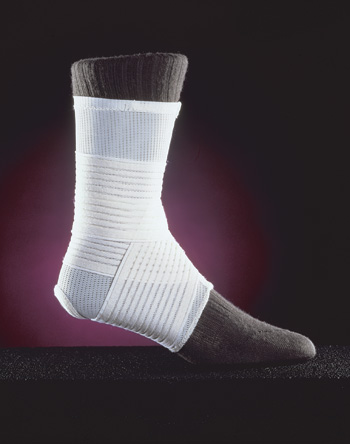 attained after the injury, post-traumatic ankle arthritis could very well occur in the future.
A study taken from 1991-2004 at the University of Iowa, studying 639 patients with grade 3 or 4 arthritis concluded that ankle injury is the most common cause of ankle arthritis. Trauma was the primary cause of arthritis in 445 patients out of the 639 patients surveyed. That is about 70%. The other 30% was caused by rheumatoid disease and primary osteoarthritis.
Symptoms of ankle arthritis include: pain or tenderness, stiffness or reduced motion, swelling, difficulty walking, bone spurs, and instability. No matter what stage of arthritis is present, or if arthritis is just a possible threat in the future, professional care should be sought. Podiatrists everywhere have many surgical and non-surgical options to help cope with the pain, prevent arthritis from over running everyday life, and catch arthritis before it become a problem.

Friday, November 13, 2009
This little piggy...
This little piggy ran a mile. This little piggy swam three. This little piggy bench pressed. This little piggy danced free. And this little piggy showed up everyone else in the gym. But how did these piggys get so strong?? Because their owner never forgot to work them out before and after the physical actives the owner participated in.
When exercising, feet are usually forgotten to be warmed up and cooled down with the rest of the body. Rarely are they considered a body part that needs to be strengthened. They are smaller than other parts of the body, attract less attention, and are usually out of sight and out of mind. But these little guys under go a huge amount of impact during a work out or a physical activity.
Stretching and strengthening feet is a very important way to prevent foot injury from occurring during the everyday life not and in the future. This is also a very effective way to help relieve foot pain if an injury has already occurred. A little tender love and care is important to keep your feet healthy and pain free enough to get you the places you need to go.
Here are a few stretches, exercises, and massage techniques to keep your piggys marching on.
Stretches:
- Toe Raises: Hold onto a wall for support. From flat foot, rise up so you are standing on your toes only. Hold for 5 seconds. Repeat 10 times.
- Toe Points: Sitting down, flex the arch of the foot so the toes are pointed into a straight line and the heel is close to the back of the leg. Hold for 5 seconds. Repeat 10 times
- Toe Curls: Sitting down, scrunch all your toes together so they are pointing away from the top of your foot. Hold for 5 seconds. Repeat 10 times.
Exercises:
- Toe Squeezes: Hold a toe separator between your toes. Squeeze for 5 seconds. Repeat 10 times. This exercise is great for people with Hammer toes of suffer from toe cramps.
- Towel Scoop. While standing, place a towel on the floor, pick it up with only your toes. Repeat 5 times.
Massage techniques:
1. Apply an ample amount of lotion to feet.
2. Start by massaging the length of your feet up and down. Repeat 3-5 times.
3. Cup your heel and gently assist your foot in rotating the ankle. Repeat 5 times both directions.
4. Hold toes in one hand and heel in another. Gentle bring toes back towards your shins. This will stretch the calf. Hold for 3-5 seconds and repeat 5 times.
5. Gently grab each toe individually and pull directly away from foot to stretch and lengthen the toe. Hold for 3-5 seconds and repeat 5 times.
6. With your thumb, in circular motions, gently rub and apply pressure to the arch of your foot. Continue for 60 seconds.
7. To finish, once again massage the length of your foot 3-5 times.

When exercising, feet are usually forgotten to be warmed up and cooled down with the rest of the body. Rarely are they considered a body part that needs to be strengthened. They are smaller than other parts of the body, attract less attention, and are usually out of sight and out of mind. But these little guys under go a huge amount of impact during a work out or a physical activity.
Stretching and strengthening feet is a very important way to prevent foot injury from occurring during the everyday life not and in the future. This is also a very effective way to help relieve foot pain if an injury has already occurred. A little tender love and care is important to keep your feet healthy and pain free enough to get you the places you need to go.
Here are a few stretches, exercises, and massage techniques to keep your piggys marching on.
Stretches:
- Toe Raises: Hold onto a wall for support. From flat foot, rise up so you are standing on your toes only. Hold for 5 seconds. Repeat 10 times.
- Toe Points: Sitting down, flex the arch of the foot so the toes are pointed into a straight line and the heel is close to the back of the leg. Hold for 5 seconds. Repeat 10 times
- Toe Curls: Sitting down, scrunch all your toes together so they are pointing away from the top of your foot. Hold for 5 seconds. Repeat 10 times.
Exercises:
- Toe Squeezes: Hold a toe separator between your toes. Squeeze for 5 seconds. Repeat 10 times. This exercise is great for people with Hammer toes of suffer from toe cramps.
- Towel Scoop. While standing, place a towel on the floor, pick it up with only your toes. Repeat 5 times.
Massage techniques:
1. Apply an ample amount of lotion to feet.
2. Start by massaging the length of your feet up and down. Repeat 3-5 times.
3. Cup your heel and gently assist your foot in rotating the ankle. Repeat 5 times both directions.
4. Hold toes in one hand and heel in another. Gentle bring toes back towards your shins. This will stretch the calf. Hold for 3-5 seconds and repeat 5 times.
5. Gently grab each toe individually and pull directly away from foot to stretch and lengthen the toe. Hold for 3-5 seconds and repeat 5 times.
6. With your thumb, in circular motions, gently rub and apply pressure to the arch of your foot. Continue for 60 seconds.
7. To finish, once again massage the length of your foot 3-5 times.

Thursday, September 17, 2009
Hammertoes
A hammertoe is a bending of the toe at the first joint of the digit, called the proximal interphalangeal joint. Flexible hammertoes are still moveable at the joint and are less serious as they can be treated while still in the developmental stage. Splints such as Yoga Toes can help. Rigid hammertoes are more advanced than the flexible condition. The joint is misaligned and immobile, making surgery the usual course of treatment. Hammertoes are more common to females than males.
Hammertoes are formed due a muscle imbalance in the toes. This imbalance causes increased pressures on the tendons and joints of the toe, leading to its contracture. There is a strong hereditary predisposition to develop hammertoes, although shoes, trauma and arthritis can also contribute.
Your feet should not hurt. If you are suffering from hammertoes, call your local podiatrist to discuss the best option for you. If you live near Roanoke, VA, I'd love to help you at Shenandoah Podiatry.
Wednesday, August 26, 2009
Pregnancy And Your Feet
Being pregnant is usually a wonderful experience, but it can make life a little uncomfortable at times. Many women suffer from foot and leg problems during pregnancy but the good news is there are things you can do to prevent or relieve them. The two most common foot problems during pregnancy are over-pronation (flat feet) and edema (swelling). Leg cramps are also a common experience during the second trimester.
During pregnancy hormones can do some interesting things to prepare your body for birth. One of the things they do is relax ligaments to help the body during birth. Unfortunately it is not only pelvic structures that can become more relaxed, but also your feet. The other main reason that you may become prone to flat feet during pregnancy is due to the natural weight gain that occurs. Not only do you gain weight, but your body’s center of gravity changes quite dramatically forcing a change in gait.
While there is not a lot you can do to prevent this condition occurring, apart from keeping up gentle exercise and not over eating,there are things you can do to prevent any further pain or damage. Make sure your shoes are not too tight, you may even need to wear a half or even full size larger shoe than you normally would. Your feet will need extra support and shock absorption too. You can purchase specially designed orthotic insoles or shoes that will provide this extra support.
Edema, or swelling of the feet and ankles, is very common particularly towards the end of pregnancy. This is caused by increasing pressure from the growing uterus that can lead to fluid pooling in the lower extremities. Fortunately there are things you can do to help prevent edema and to relieve it.
Drink plenty of water as this actually helps the body to release the fluids and avoid retention. Cut down on salt in your diet,including soda drinks as salt encourages water retention. Wear comfortable shoes and avoid socks that have seams or tight bands. While it is important to exercise you also need to rest and elevate your feet frequently. If you do need to stand keep moving.
Swimming is great exercise during pregnancy and the support of the water will also help with swollen feet. Soak your feet in cool water too to ease pain and disperse fluid build up. Get in the habit of sleeping on your left side as this reduces pressure on your veins. Avoid crossing your legs or ankles when you are sitting. If you have to work at a desk remember to take plenty of breaks and walk around and if you can keep a footstool under your desk so you can raise your ankles.
Some women who suffer from severe edema also find that wearing compression stockings can also be helpful. Treat your self to a few reflexology treatments too. This can be great not only for foot problems but any other pregnancy issues as well.
If you develop swelling around your face see your doctor immediately as this can be a sign of something more serious. Feet can be a bit of a pain in pregnancy but it is usually controllable and any problems will dissipate after birth.
Tuesday, June 23, 2009
What Is A Podiatrist?
Simply put, podiatrists are medical experts that deal exclusively with problems associated with the foot and ankle. The DPM after a podiatrist's name stands for Doctor of Podiatric Medicine. Because our training is highly specialized, we are able to quickly and accurately diagnosis your condition while offering the most modern treatment plans available.
Many people know that podiatrists treat senior citizens and those with diabetic foot conditions but may not realize that we also treat patients of all ages for a wide variety of ailments. Podiatrists are well qualified to help children and young adults with any foot and ankle problems they may be experiencing . Sports injuries, heel pain, bunions and hammer toes are just a few problems we provide treatment for. If your discomfort involves any part of the foot or ankle, a podiatrist is the one to call.
For more information visit our website http://www.roanokefoot.com/
Many people know that podiatrists treat senior citizens and those with diabetic foot conditions but may not realize that we also treat patients of all ages for a wide variety of ailments. Podiatrists are well qualified to help children and young adults with any foot and ankle problems they may be experiencing . Sports injuries, heel pain, bunions and hammer toes are just a few problems we provide treatment for. If your discomfort involves any part of the foot or ankle, a podiatrist is the one to call.
For more information visit our website http://www.roanokefoot.com/
Tuesday, June 9, 2009
Golfing Feet
Golf legend Jack Nicklaus says the feet lead the way in golf, playing a critical role in timing, balance, distance, and direction. Lively feet, says Nicklaus, are the key to a great golf score. To improve your golf game and prevent injury, start by wearing proper golf shoes that will be comfortable over the four or five miles of a typical round. Stretch your feet and legs before golfing. For maximum results, maintain proper foot alignment during your swing. During the back swing, keep weight evenly distributed on the back foot while rolling the front foot in. A good downswing requires a quick weight shift from back to front, with the back foot rolling in and the front foot rolling out.
For those who participate in sports activities of all kinds, professional attention and guidance can help reduce the potential for discomfort and injury. Since all difficulties with your feet can adversely affect you comfort and lifestyle, SHENANDOAH PODIATRY invites your call for an appointment to maximize your health and well-being. We can’t promise you a better golf score but we can promise you comprehensive foot care geared to your personal needs. We can often accommodate same-day appointments.
Dedicated To Your Healthy Feet,
Dr. Jennifer Feeny
For those who participate in sports activities of all kinds, professional attention and guidance can help reduce the potential for discomfort and injury. Since all difficulties with your feet can adversely affect you comfort and lifestyle, SHENANDOAH PODIATRY invites your call for an appointment to maximize your health and well-being. We can’t promise you a better golf score but we can promise you comprehensive foot care geared to your personal needs. We can often accommodate same-day appointments.
Dedicated To Your Healthy Feet,
Dr. Jennifer Feeny
Tuesday, June 2, 2009
The Unique Nature Of The Skin On Your Feet
Your foot’s skin is unique— it contains some of the body’s most sensitive skin as well as the thickest skin— and require special care and attention. The skin on the bottom of the heel is the thickest of the body. Bearing incredible weight and pressure every day, this skin can become even thicker and suffer painful cracks if you don’t take care of it. On top of your feet is some of the body’s thinnest and most pliable skin. Skin problems that can affect the feet include blisters, corns, calluses, warts, and fungal or skin infections. These conditions can be painful and debilitating, so it pays to care for the skin on your feet.
You’re feet aren’t supposed to hurt, nor are they supposed to hurt you. Skin problems, bunions, fungal nails, heel pain, hammertoes— there’s no reason to suffer with them any longer. Visit your local podiatrist. SHENANDOAH PODIATRY treats patients of all ages for all kinds of podiatric problems, from minor to major to the prevention of both. Feet are our business, and our practice is designed with you, our patient, in mind.
Dedicated To Your Healthy Feet,
Dr. Jennifer Feeny
P.S. Excessive friction, pressure, and moisture are common triggers of skin problems on the feet.
For more information visit our website http://www.roanokefoot.com/
You’re feet aren’t supposed to hurt, nor are they supposed to hurt you. Skin problems, bunions, fungal nails, heel pain, hammertoes— there’s no reason to suffer with them any longer. Visit your local podiatrist. SHENANDOAH PODIATRY treats patients of all ages for all kinds of podiatric problems, from minor to major to the prevention of both. Feet are our business, and our practice is designed with you, our patient, in mind.
Dedicated To Your Healthy Feet,
Dr. Jennifer Feeny
P.S. Excessive friction, pressure, and moisture are common triggers of skin problems on the feet.
For more information visit our website http://www.roanokefoot.com/
Subscribe to:
Posts (Atom)