Wednesday, November 25, 2009

Common Symptoms for Foot Ailments

Do you suffer from itching or scaling between your toes? Have you experienced this sensation in the past but now your feet are painful, inflamed, and possibly have blisters?

You might have Athlete’s Foot. Athlete’s foot is a fungus that enjoys the dark dampness between your toes. This is usually taken care of with an anti fungal cream or powder.

Does your big toe point towards the rest of your toes? Does your big toe look like its overlapping or invading the space of your second toe? Does the portion of bone that connects your big toe to your foot look like its protruding from your body?

You might have bunions. A bunion occurs when the bone starts pointing outward. This puts extra pressure on the toe joints which can cause inflammation and pain. Different splints and spacers can help slow this process or relieve pain but surgery is the only way to correct it.

Do you have sections on the skin of your foot that seem thicker than the rest of the skin?

You might have corns or calluses. These can be red flags for more serious foot ailments because they are caused by constant rubbing. These should only be removed by a professional.

Are your toe nails discolored, misshapen or smell? Is it painful to walk?

You might have toe nail fungus. The fungus can be gotten rid of by topical or oral medication. In extreme cases the toe nail will be completely removed so a healthy nail can have the freedom to grow.

Do you have severe and sudden attacks of pain, redness, or tenderness in your joints?

You might have gout, a form of arthritis that is caused by a build up of urate crystals in your body. These crystals are formed by uric acid, a by-product of breaking down of proteins. Different forms of therapy are now available to help cope with Gout.

Like any medical condition, the key to getting healthy faster is by listening the symptoms you have and treating the problem right away instead of just ignoring them and hoping they will go away. The sooner you see a podiatrist for your feet ailments the sooner your life doesn’t have to be run by them.

Thursday, November 19, 2009

Pain!!! A cry for help.

If you called the fire department when your house was on fire and they didn’t come, that would be really bad. Since nothing was done to put out the fire, you’d end up losing everything. This is essentially what your body is doing when it creates pain and the results of ignoring pain can be just as bad. When something hurts, your body is saying “Help, something is not right! Something is malfunctioning!” Most people try to ignore the pain, take pain killers, or think that once the pain is gone the problem will be gone as well. Sometimes the pain does just go away. But this can be very deceptive. Just because your body has stopped sending calls for help doesn’t mean the problem is fixed. Often our bodies will try to correct the problem by compensating in another way, but this ends up putting unnatural pressures on another part of our body and can cause even more problems.

If you have an ingrown toenail, don’t think that just because it’s on a smaller part of your body you can be a surgeon for a day.

If you have pain in the arches of your foot in the morning and it goes away after you stretch a little bit, don’t think your body is just being cranky.

If your toes are starting to look bent and you get corns frequently, don’t think you are just looking in a fun house mirror.

These are all symptoms of foot problems and unlike wine they do not get better with time. Listen to your body. It knows what it needs. If you are experiencing foot pain in any way or a part of you foot is starting to look different than it has in the past, call a podiatrist before the problem gets out of hand. We want to help put out the fire.

For more information visit our website www.roanokefoot.com

Monday, November 16, 2009

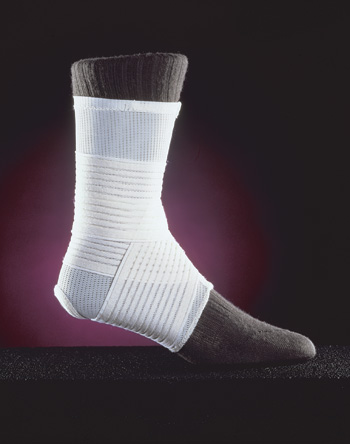
Ankle Injuries: More than just an annoyance.


Though ankle injuries are painful when they first occur, the long term damage that is caused can be even more detrimental. Ankles that have suffered an injury are seven times more likely to become arthritic that ones that have seen no trauma. Injuries can very in severity and still have the same long term affects. From inconspicuous reoccurring ankle sprains to more seemingly detrimental ankle fractures or broken bones, the damage that is caused is irreversible. Ankle cartilage is quite strong and can usually withstand a life time of movement but when the cartilage gets damaged its cells are unable to be repaired. Cartilage is made to glide smoothly to create movement but when it becomes worn or frayed the movement is not fluid. This leads to swelling, inflammation, and pain in the ankle joints. If proper treatment is not attained after the injury, post-traumatic ankle arthritis could very well occur in the future.

A study taken from 1991-2004 at the University of Iowa, studying 639 patients with grade 3 or 4 arthritis concluded that ankle injury is the most common cause of ankle arthritis. Trauma was the primary cause of arthritis in 445 patients out of the 639 patients surveyed. That is about 70%. The other 30% was caused by rheumatoid disease and primary osteoarthritis.

Symptoms of ankle arthritis include: pain or tenderness, stiffness or reduced motion, swelling, difficulty walking, bone spurs, and instability. No matter what stage of arthritis is present, or if arthritis is just a possible threat in the future, professional care should be sought. Podiatrists everywhere have many surgical and non-surgical options to help cope with the pain, prevent arthritis from over running everyday life, and catch arthritis before it become a problem.

Friday, November 13, 2009

This little piggy...

This little piggy ran a mile. This little piggy swam three. This little piggy bench pressed. This little piggy danced free. And this little piggy showed up everyone else in the gym. But how did these piggys get so strong?? Because their owner never forgot to work them out before and after the physical actives the owner participated in.

When exercising, feet are usually forgotten to be warmed up and cooled down with the rest of the body. Rarely are they considered a body part that needs to be strengthened. They are smaller than other parts of the body, attract less attention, and are usually out of sight and out of mind. But these little guys under go a huge amount of impact during a work out or a physical activity.

Stretching and strengthening feet is a very important way to prevent foot injury from occurring during the everyday life not and in the future. This is also a very effective way to help relieve foot pain if an injury has already occurred. A little tender love and care is important to keep your feet healthy and pain free enough to get you the places you need to go.

Here are a few stretches, exercises, and massage techniques to keep your piggys marching on.


Stretches:
- Toe Raises: Hold onto a wall for support. From flat foot, rise up so you are standing on your toes only. Hold for 5 seconds. Repeat 10 times.
- Toe Points: Sitting down, flex the arch of the foot so the toes are pointed into a straight line and the heel is close to the back of the leg. Hold for 5 seconds. Repeat 10 times
- Toe Curls: Sitting down, scrunch all your toes together so they are pointing away from the top of your foot. Hold for 5 seconds. Repeat 10 times.

Exercises:
- Toe Squeezes: Hold a toe separator between your toes. Squeeze for 5 seconds. Repeat 10 times. This exercise is great for people with Hammer toes of suffer from toe cramps.
- Towel Scoop. While standing, place a towel on the floor, pick it up with only your toes. Repeat 5 times.

Massage techniques:
1. Apply an ample amount of lotion to feet.
2. Start by massaging the length of your feet up and down. Repeat 3-5 times.
3. Cup your heel and gently assist your foot in rotating the ankle. Repeat 5 times both directions.
4. Hold toes in one hand and heel in another. Gentle bring toes back towards your shins. This will stretch the calf. Hold for 3-5 seconds and repeat 5 times.
5. Gently grab each toe individually and pull directly away from foot to stretch and lengthen the toe. Hold for 3-5 seconds and repeat 5 times.
6. With your thumb, in circular motions, gently rub and apply pressure to the arch of your foot. Continue for 60 seconds.
7. To finish, once again massage the length of your foot 3-5 times.

Tuesday, October 13, 2009

Plantar Fasciitis causes problems for another NFL player

Defensive tackle Tank Johnson sat out for a second game last Sunday due to Plantar Fasciitis. The injury first flared up on Sunday, September 27th, 2009 and has kept Johnson out of the games and practices since then. The cause of the injury has not been disclosed, but the nature of Johnson’s job as an NFL player certainly contributes to his condition. The repetitious movements and weight shifts typical of an NFL lineman must be endured by the plantar fascia and can cause the tissue to become irritated and inflamed.
This is the second player to suffer from Plantar Fasciitis in the past two weeks. Is this an injury we will be seeing more frequently this season? Coaches, parents, and athletes should take the appropriate precautions to make sure a player’s feet are in top condition. Making sure shoes are appropriately supportive, protective, and correctly fitting is the first place to start. Extra arch support inserts might be a wise choice for the players with flat feet or weak ankles. Regular check ups ensure the feet are kept strong and healthy which will help keep the team running smoothly.
For more information visit our website http://www.roanokefoot.com/

Tuesday, October 6, 2009

Giant Hobbled by Plantar Fasciitis

Eli Manning, quarterback of the New York Giants, was recently diagnosed with plantar fasciitis. Plantar fasciitis is caused when the thick band of tissue running along the bottom of the foot, the plantar fascia, becomes inflamed. Symptoms include severe stabbing, burning, or aching sensations in the bottom of the foot and/or in the heel. These symptoms usually occur during weight bearing movements but may be present even when just standing. It’s obvious to see how this would cause difficulty for a quarterback to do his job. The QB sought council after he was diagnosed and immediately started treatment. He is hoping to practice with his team on Wednesday but for now his pain and ability to play is being judged day to day.

Being a quarterback for a professional football team is not the only profession where plantar fasciitis can cause problems. Almost any job or activity where frequent walking or standing on hard surfaces can cause this ailment. Pregnancy, obesity, and several other sports tend to make people prone to this injury as well.

Luckily for Eli and anyone who may suffer from plantar fasciitis, there is hope. There are several treatment options offered by podiatrists to correct this problem. Foot and heel pain does not have to be part of everyday life when correct council is available. Treatment can take anywhere from 6 to 18 months. When plantar fasciitis is caught in its early stages the recovery rate is dramatically reduced. Pain in the foot during the first few steps of the day (especially when just getting out of bed) is an early warning to call a podiatrist and get the feet checked out.

Take care of your feet today… so they can continue to take you the places you need to go tomorrow!

Thursday, September 17, 2009

Hammertoes

A hammertoe is a bending of the toe at the first joint of the digit, called the proximal interphalangeal joint. Flexible hammertoes are still moveable at the joint and are less serious as they can be treated while still in the developmental stage. Splints such as Yoga Toes can help. Rigid hammertoes are more advanced than the flexible condition. The joint is misaligned and immobile, making surgery the usual course of treatment. Hammertoes are more common to females than males.

Hammertoes are formed due a muscle imbalance in the toes. This imbalance causes increased pressures on the tendons and joints of the toe, leading to its contracture. There is a strong hereditary predisposition to develop hammertoes, although shoes, trauma and arthritis can also contribute.

Your feet should not hurt. If you are suffering from hammertoes, call your local podiatrist to discuss the best option for you. If you live near Roanoke, VA, I'd love to help you at Shenandoah Podiatry.